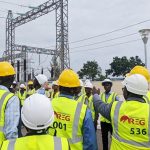
President Paul Kagame met senior leaders of the Rwandan Patriotic Front (RPF-Inkotanyi) in discussions that looked back at the party’s history, its guiding values and its role in Rwanda’s development over nearly four decades.
The meeting was held on July 27, 2026, at Intare Arena, according to the Office of the President.
The discussions highlighted the importance of maintaining the principles that the RPF-Inkotanyi says have guided its work, including accountability, leadership focused on citizens and commitment to Rwanda’s development.
The Office of the President said the meeting emphasized the need to continue upholding these values to help accelerate the implementation of the party’s objectives.
RPF-Inkotanyi was formed in 1987, following the transformation of the Rwandan Alliance for National Unity (RANU), an organisation created in 1980 to advocate for the return of Rwandan refugees who had spent years outside the country.
The formation of the RPF came at a time when many Rwandan refugees, particularly those in Uganda, were seeking a solution to their prolonged displacement.
In December 1987, RANU members held a general assembly where they decided to reorganize the movement and adopt the name Rwandan Patriotic Front (RPF-Inkotanyi).
The movement later created its armed wing, the Rwandan Patriotic Army (RPA), which launched its first military operation in Rwanda on October 1, 1990.
The armed struggle was led initially by Major General Fred Gisa Rwigema, who died shortly after the beginning of the campaign, before Major Paul Kagame took over leadership of the forces.
After the 1994 Genocide against the Tutsi, the RPF-led government faced the challenge of rebuilding a country whose institutions and economy had been severely damaged.
In 1995, Rwanda’s national budget stood at 56 billion Rwandan francs, with foreign assistance accounting for more than 90% of the budget. The country’s gross domestic product per capita was estimated at $111.9.
Over the years that followed, Rwanda pursued reconstruction and development programmes that contributed to growth in areas including the economy, public services and infrastructure.
In 2025, Rwanda’s gross domestic product reached 23.387 trillion Rwandan francs, up from 19.918 trillion francs in 2024. The national budget for the 2026/2027 financial year reached 7.796 trillion Rwandan francs.
Life expectancy also increased from around 28 years after the 1994 Genocide against the Tutsi to nearly 70 years today.
The RPF-Inkotanyi has continued to present accountability, unity and citizen-focused leadership as key principles guiding its approach to governance.
The meeting comes as the party reflects on its history and the challenges ahead as Rwanda continues pursuing its development priorities.