The European Union has pledged Rwf 44 billion (26 million euros) to support Rwandan farmers’ cooperatives, reinforcing earlier contributions of over Rwf 127 billion through the International Fund for Agricultural Development (IFAD). The funding is aimed at boosting sustainable agriculture, improving rural livelihoods, and strengthening food security.
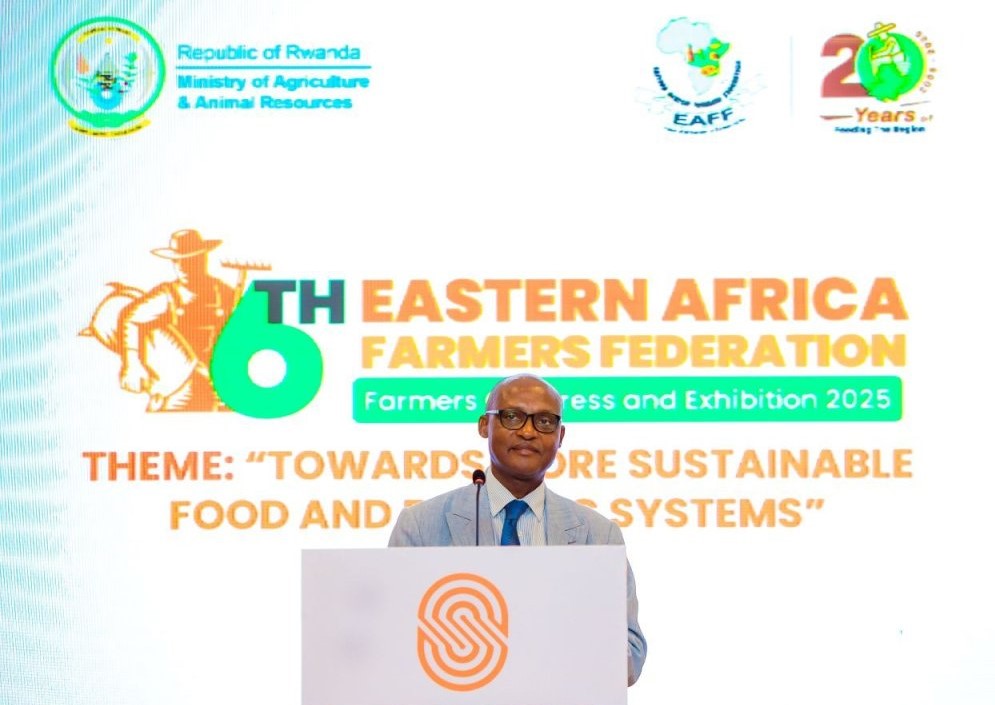
The announcement was made on September 30, 2025, during the East African Farmers Federation (EAFF) conference in Kigali, which gathered farmers, policymakers, and development partners from across the East African Community (EAC). The event focused on sustainable farming practices and strategies to increase long-term productivity.
Elise Hadman, Deputy Head of Finance and Policy at the EU Delegation in Rwanda, highlighted the EU’s commitment to empowering smallholder farmers. “So far, cooperatives and agri-processors have accessed more than 75 million euros through EU–Bank of Kigali partnerships under IFAD. Today, we are pleased to confirm an additional 26 million euros, bringing total EU support to over Rwf 170 billion,” Hadman said.
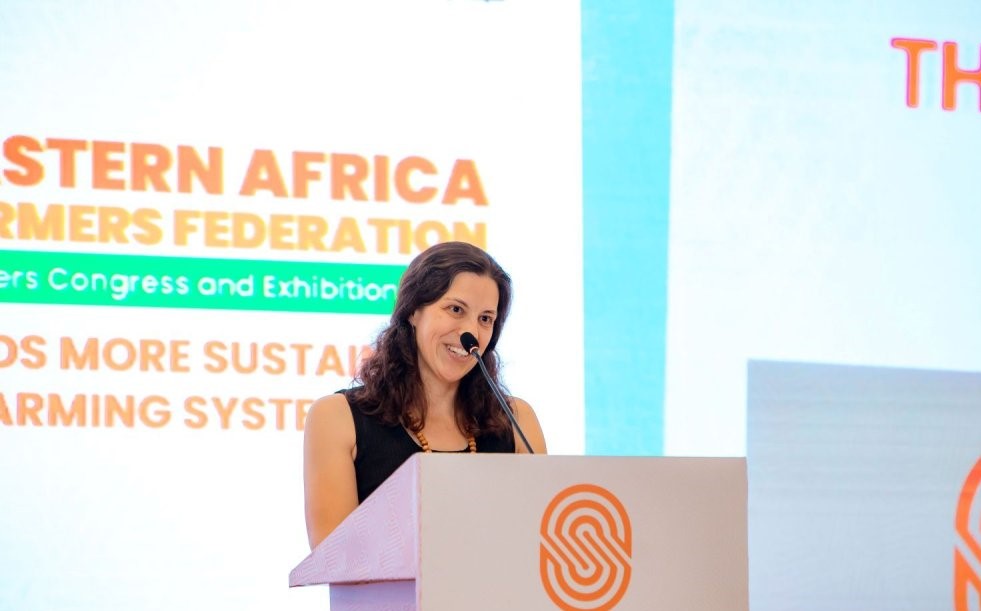
Elise Hadman, Deputy Head of Finance and Policy at the EU Delegation in Rwanda
Rwanda’s Minister of Agriculture and Animal Resources, Dr. Mark Cyubahiro Bagabe, explained that Rwandan agriculture thrives when land is pooled and managed collectively, enabling farmers to reduce costs, access machinery, and market larger volumes of produce. “Farming that sustains Rwandans is not the small plot you see — it is agriculture practiced on consolidated land that reaches the market,” Dr. Bagabe said.
The minister stressed that EU funding should be used to increase production, not for consumption, to help reduce Africa’s dependence on food imports.
Market access and climate adaptation remain challenges for farmers. Elizabeth Nsimadala, EAFF President, said more than 250,000 cooperative members already use digital platforms to connect with buyers. EAFF also trains youth and links them to partners such as the Food and Agriculture Organization (FAO), helping them market crops and access financing. Women farmers are supported through capacity-building initiatives.
Césarie Kantarama, a farmer and leader of the Ingabo farmers’ union, noted that unpredictable weather continues to affect yields. However, government programs — including irrigation, tree planting, and the distribution of quality seeds — help farmers adapt. He added that cooperative action, from local groups to the regional level, has strengthened production and fostered resilience.
The EU estimates that total support to Rwanda’s agricultural sector will reach 500 million euros between 2020 and 2030, reinforcing investment in sustainable farming and food security across the country and the region.