Civil society organizations in Ituri are seeking to strengthen their commitment to the fight against the Ebola epidemic. They are focusing on raising community awareness to combat misinformation, reduce resistance, and encourage the adoption of preventive measures.
Meeting on Tuesday, July 21, 2026, in Bunia with their provincial coordination team, the response team pledged its support for this initiative.
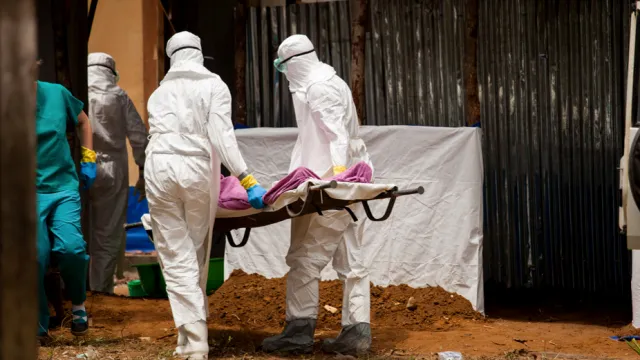
The Ebola epidemic in the eastern Democratic Republic of Congo continues to escalate, with health authorities confirming that the virus has now reached 27 of the 36 health zones across Ituri Province.
In a crucial bid to halt the virus’s trajectory, local civil society leaders met with provincial epidemic response officials in Bunia on Tuesday, July 21, launching a coordinated three-month grassroots strategy to dismantle community mistrust, combat dangerous rumors, and slow rising mortality rates.
Despite ongoing medical interventions, frontline teams report that public skepticism and fear remain the single greatest obstacle to containing the outbreak. In several affected communities, denial regarding the virus’s existence has led families to hide sick relatives from healthcare workers rather than seek specialized treatment, directly accelerating community transmission.
“To this day, there is still active resistance,” warned Dieudonné Lossa, overall coordinator for civil society in Ituri. “Many sick people are hiding within the community, and the mortality rate continues to climb as a result. We know that by stepping in directly, we can help break this resistance, reduce deaths, and stop the chain of transmission.”
“Many sick people are hiding within the community, and the mortality rate continues to climb as a result.”, Dieudonné Lossa, Civil Society Coordinator, Ituri
To address the divide between health authorities and local residents, civil society groups presented a comprehensive three-month awareness campaign during Tuesday’s strategy session. The plan focuses on direct door-to-door dialogue, leveraging respected community figures to counter misinformation and advocate for early medical intervention.
Provincial response leaders enthusiastically backed the initiative, recognizing that clinical measures alone cannot succeed without local buy-in.
“Civil society maintains a level of proximity and trust with the population that institutional response teams often struggle to achieve,” said Dr. Pierre Akili Mali, Provincial Coordinator for the Ebola Response. “We believe this partnership will help break down existing barriers, rebuild trust between health teams and residents, and ultimately allow us to bring this outbreak under control as quickly as possible.”
The rapid expansion into 27 health zones highlights the fragile health infrastructure across eastern DRC, where insecurity and population displacement frequently complicate epidemic response efforts. With the three-month outreach plan now set to launch, health officials hope that community-led sensitization will prove to be the turning point in stabilizing the province.