More than 3,700 people have died in the Ebola outbreak sweeping the Democratic Republic of Congo (DRC), even as global funding for the response tops $2.9bn (£2.3bn).
The World Health Organization (WHO) says confirmed cases have reached 7,820 across 63 health zones in seven provinces. Health workers account for 239 of those cases and about 50 deaths.
Officials say the outbreak is now spreading five times faster than any previous Ebola epidemic on record.
Funding boost
G20+ countries pledged a further $700m on Wednesday, at a meeting convened by the US on the sidelines of the UN General Assembly in New York.
Africa CDC Director-General Dr Jean Kaseya said the pledge pushed total funding mobilised past $2.9bn.
The US remains the largest single donor. It has given $887m so far and pledged a further $267m this week. The US State Department says the new money will fund treatment units, burial teams, protective equipment, surveillance and contact tracing.
The EU is the second-largest funder. Dr Kaseya also credited 27 African countries with contributing to the response.
He called for more transparency in how the money is spent. “We must be able to trace every single dollar – from commitment to disbursement, from implementing partner to expenditure, and ultimately to the services delivered to affected communities,” he said.
The WHO says infections fell 26% in Ituri province and 15% in Haut-Uele over the past 21 days. But North Kivu saw a 73% rise in the same period.
“While cases and deaths are declining in some provinces, they continue to rise in others,” said Dr Marie Roseline Belizaire, WHO’s regional emergency director for Africa. “The outbreak is still not under control.”
Africa CDC’s Dr Wessam Mankoula said the outbreak was “cooling in Ituri while it accelerates in Nord-Kivu”. New cases there rose 56% and deaths 19% over three weeks. The province’s case fatality rate stands at 60.5%, against a national average of 48.3%.
Officials blame ongoing conflict, delayed treatment-seeking and staff shortages for the surge.
Ituri remains the worst-hit province overall, with 5,966 cases and 2,737 deaths, compared with 1,438 cases and 872 deaths in North Kivu.
Speaking from Beni, WHO’s Dr Catherine Smallwood said staffing, not beds, was now the main constraint. “The human resources gap is one of the biggest gaps,” she said. She said the response needed to shift from urban centres such as Beni, Butembo and Katwa to remote villages, where long distances delay treatment.
Children hit hardest
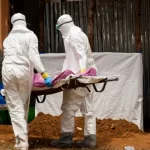
About one in three new cases is only identified after the patient has died in the community, the WHO says. Dr Belizaire said earlier detection could have saved many of those lives, and warned that community deaths raise infection risks for relatives and carers involved in burial rites.
Contact tracing has improved to nearly 88%. But officials say too many new infections still have no known link to a previous case.
Children under five have the highest case fatality rate, at 62%, compared with 43% for people over 65 and about 40% for adults overall.
WHO’s Dr Daniel Youkee said young children’s immune systems and lower physiological reserve make them harder to treat. He called for paediatric-specific supplies and staff training.
Dr Smallwood said symptoms are also harder to detect in young children, who “can’t necessarily explain their signs and symptoms as well as adults”.
Response infrastructure
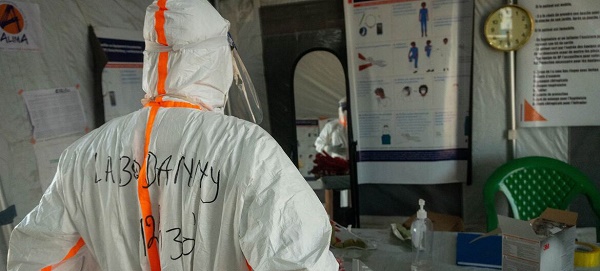
The response now includes nearly 1,400 treatment and isolation beds across 49 centres, and 25 laboratories able to process up to 2,500 tests a day.
But Dr Belizaire said infrastructure alone would not end the outbreak. “It is about directing teams, expertise and resources to the areas where transmission is greatest,” she said.
The outbreak has grown from eight cases in three health zones in mid-May to its current scale.
Ebola spreads to humans from wild animals such as fruit bats and primates, then between people through contact with bodily fluids. The average case fatality rate is about 50%, according to the WHO. The 2014-16 West Africa outbreak remains the largest on record.