The Chairperson of the African Union has issued a strong appeal to global and regional powers to keep borders open amid a growing Ebola outbreak, warning that isolation tactics will severely disrupt the collective fight against the virus.
Speaking at a joint press conference in Kinshasa alongside DRC President Félix Tshisekedi, Burundian President Évariste Ndayishimiye urged African nations and international partners to prioritize medical solidarity over panic-driven border closures.
“I call on all states not to close borders, but rather to stand in solidarity and tackle this disease together,” Ndayishimiye stated, advocating for a highly coordinated containment strategy built on prevention, rapid regional cooperation, and strict adherence to scientific guidance.
Ndayishimiye pointed to Burundi’s own operational model, where borders remained fully open to cross-border trade while health authorities successfully intensified screening, contact tracing, and localized health surveillance.
Frontline Logistics Secure a 4-Ton Lifeline in Ituri
As political leaders push for regional cooperation in the capital, a massive logistical network is accelerating to support healthcare workers in the eastern outbreak zones.
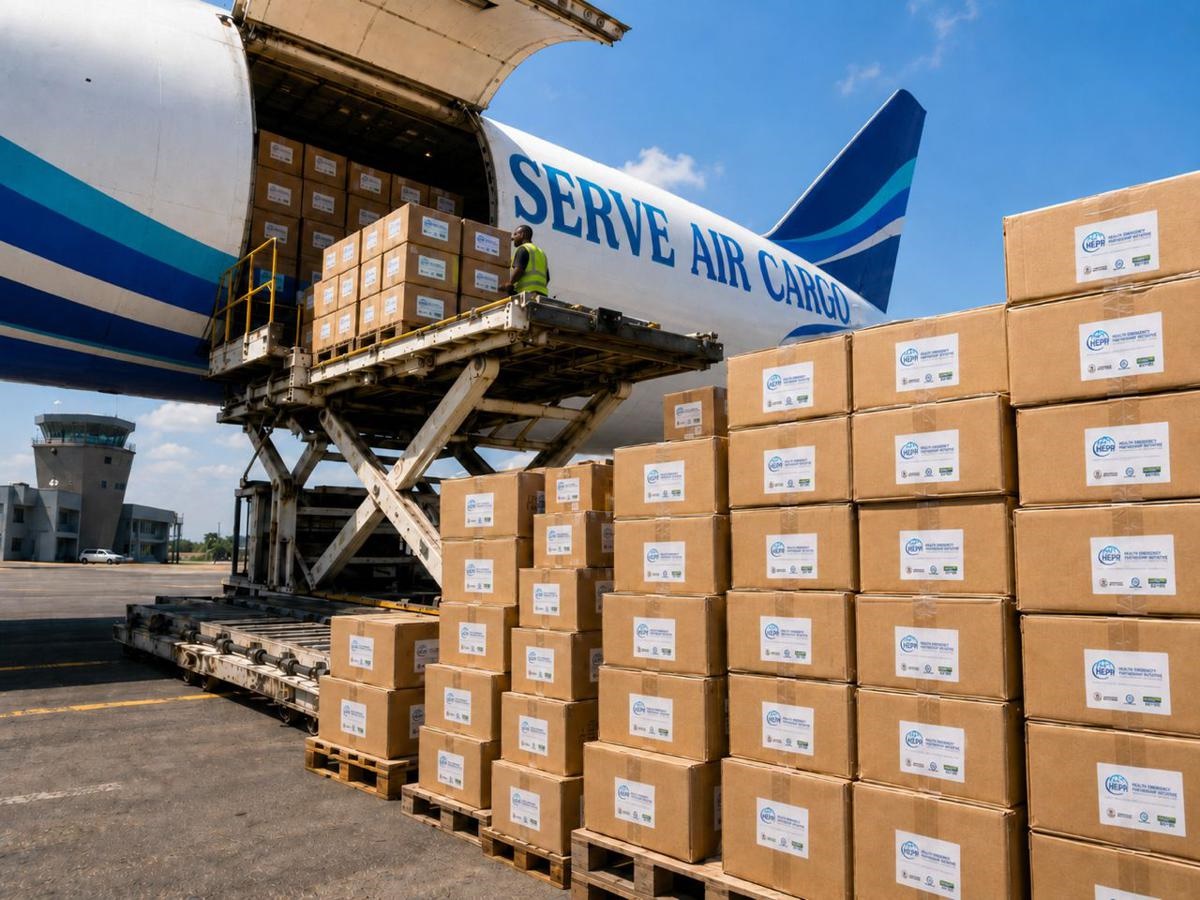
On Wednesday, humanitarian organization VillageReach, with direct backing from UNICEF, successfully delivered an initial four-ton consignment of personal protective equipment (PPE) and essential medicines to response teams on the ground in Bunia, located in the hard-hit Ituri province.
Emergency medical cargo arriving to support the regional Ebola containment strategy.. Source: Michel Lunanga / Getty Images
The delivery marks the opening wave of a major regional health security deployment. Under the Health Emergency Preparedness and Response Trust Fund (HEPRR) project, Ituri and neighboring North Kivu provinces are slated to receive a total of 340 tons of specialized medical counter-measures, ultimately putting over 263,000 items of protective gear into the hands of frontline responders.
Protecting the Frontline
The newly arrived supply chain—consisting of heavy-duty gloves, surgical masks, protective goggles, and clinical equipment—is specifically engineered to safeguard medical personnel and community health workers operating in high-exposure environments.
“Through this allocation, we want to strengthen the safety of teams deployed in the field, support the care of affected people, and preserve the continuity of health services,” explained Dr. Trésor Amiri, who leads the sample transport project at VillageReach.
Beyond physical barriers, the VillageReach initiative is addressing operational diagnostic bottlenecks by financing rapid sample transport to specialized laboratories, cutting down wait times for case confirmations. Concurrently, nearly 1,000 community health workers are being rapidly trained across eight critical health zones in Ituri to bolster community-level epidemiological surveillance.
The targeted resource surge has been warmly welcomed by national response structures working under challenging local conditions. The UN peacekeeping mission, MONUSCO, has reaffirmed its full logistical support to ensure medical flights and personnel can safely navigate active operational zones in Bunia.
Dr. Mukoko Muaku, a senior member of the national response team, emphasized that protecting health providers is the single most important factor in keeping a local health system from collapsing during an epidemic. “This support will help to better protect healthcare providers, who are often on the front lines against the virus,” Dr. Muaku noted, “while systematically improving patient care and the absolute effectiveness of interventions in the field.”