President Donald Trump administration has recalled the United States ambassador to Rwanda, alongside envoys to Burundi and Uganda, as part of a wider effort to reshape Washington’s diplomatic presence abroad.
The move is aimed at ensuring that U.S. diplomats fully support President Trump’s “America First” foreign policy priorities, according to U.S. officials.
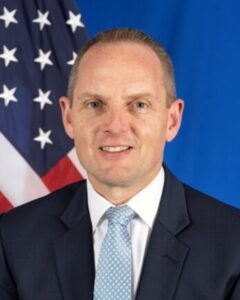
Ambassador Eric W. Kneedler is the United States Ambassador to the Republic of Rwanda. He is a career diplomat and a senior member of the U.S. Foreign Service, holding the rank of Minister, with decades of experience representing American interests in diplomatic postings around the world.
The recall comes amid a broader shake-up affecting U.S. embassies worldwide. According to two State Department officials, chiefs of mission in at least 29 countries were informed last week that their assignments would end in January.
All of the affected ambassadors were appointed during the Biden administration. Many had initially remained in place after President Trump returned to office, surviving an early round of dismissals that focused mainly on political appointees. However, that changed this week, when diplomats began receiving formal notices from Washington informing them of their imminent departure.
Although ambassadors serve at the pleasure of the president, they typically remain in their roles for three to four years. Officials said those being recalled are not losing their Foreign Service positions and may return to Washington for other assignments if they choose.
The State Department declined to comment on the exact number of ambassadors affected but defended the decision, describing it as a standard process under any administration. It said ambassadors are personal representatives of the president, and it is the president’s right to appoint individuals who advance his policy agenda.
Africa is the continent most affected by the recalls, with ambassadors removed from 13 countries, including Rwanda, Burundi, Uganda, Nigeria, Senegal and Somalia. Changes are also taking place in parts of Asia, Europe, the Middle East and the Western Hemisphere.
The recalls were first reported by Politico and have raised concerns among some U.S. lawmakers and the union representing American diplomats.