The United Kingdom has seen unusual cases of monkeypox, which is normally spread by infected wild animals in Africa.
The first case on 7 May 2022 is thought to have been brought into the UK by a traveller returning from Nigeria.
A week later, two more had been diagnosed with monkeypox, and health authorities said they were not related to the initial case.
Another four cases have been found, although the link is not clear, leading to concern about community transmission, though the risk of it spreading between people is generally low unless there is close physical contact.
Cases are rarely seen outside Central and West Africa, although there were two cases in the US last year, both in travellers returning from Nigeria.
So what is this disease, how does it spread and can it be treated? Here are five things you need to know about this deadly disease.
It’s caused by a smallpox-like virus
Monkeypox is caused by a virus of the same name that is closely related to smallpox, which has now been eradicated from the planet.
Both are members of the Orthopoxvirus genus in the family Poxviridae. Monkeypox was first discovered in 1958 when outbreaks of a disease causing a pox were discovered in monkeys held in captivity for research.
It was first seen in humans in 1970 in the Democratic Republic of the Congo (DRC) and it is now endemic in Central and West Africa.
In 2020, the World Health Organization (WHO) reported 4,594 suspected cases of monkeypox, including 171 deaths (case fatality ratio 3.7%).
They are described as suspected because confirmation requires PCR testing, which is not easily available in endemic areas.
It causes pustules all over the body
Symptoms normally appear between five and 13 days after infection, although it can take up to 21 days for them to appear.
Early symptoms include fever, headache, muscle ache, backache, swollen lymph nodes, chills and exhaustion.
Once fever has appeared, a rash tends to erupt, concentrated on the face, hands and feet before spreading to other areas of the body.
It can spread to the inside of the mouth, the genitals and the cornea. The rash progresses until it forms a scab which falls off, and in some cases large sections of skin can drop off the body.
Diagnosis requires PCR tests
Given that rashes are seen in many other diseases such as chickenpox and measles, WHO recommends diagnosis when identification is necessary.
This has to do with PCR testing, they say, because orthopoxviruses produce antigens and trigger antibodies that could look like other related viruses, thus analyses of these cannot pinpoint that the virus is monkeypox.
It can spread between people through close contact
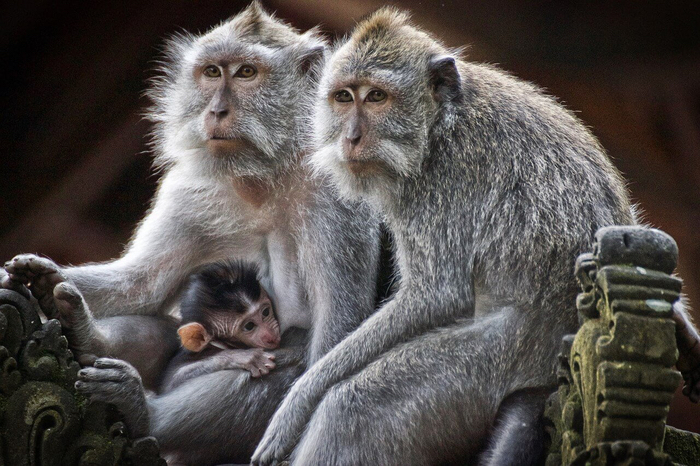
The virus generally spreads to people from infected wild animals such as rodents and primates, found in the rainforests of Central and West Africa, but human-to-human transmission can also occur.
Similar to viruses like Ebola, transmission only happens in close proximity by contact with lesions, body fluids, respiratory droplets or contaminated materials such as bedding or clothes.