Rwanda’s first participation in an international assessment of 15-year-olds showed low levels of proficiency in reading, mathematics and science, with only 3% of students reaching the minimum proficiency level across all three subjects.
The results of the 2025 Programme for International Student Assessment (PISA), released on Sept. 8, showed Rwandan students scoring 301 points in reading, 312 in mathematics and 317 in science, all below the respective OECD averages.
The assessment provides Rwanda with an internationally comparable measure of how students use knowledge to solve problems and deal with real-life situations, rather than simply recall what they have been taught.
About 13% of Rwandan students reached Level 2, the baseline proficiency level, in science, while the figures were about 8% in mathematics and 4% in reading.
The assessment was conducted from April 28 to June 7, 2025, in 213 schools across Rwanda. Of the 7,455 students selected, 6,622 completed the assessment.
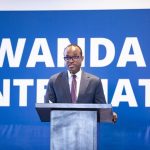
Education Minister Joseph Nsengimana acknowledged that the results were below the level Rwanda wants to achieve, but said the findings should be used to identify specific weaknesses in learning.
“When we look at how Rwanda performed, we are not where we want to be,” Nsengimana said.
He said the government would examine students’ responses, set targets for improving learning outcomes and study countries that have managed to improve their PISA performance.
“We will study the results and use them to set targets for improving learning outcomes. We will also look at countries that have improved their PISA performance and learn from their experience,” he said.
Nsengimana said the PISA findings were also consistent with areas of concern identified through Rwanda’s national assessments, giving policymakers further evidence of where improvements are needed.
For education officials, the findings raise questions about whether Rwanda’s competence-based curriculum is achieving its intended purpose of developing problem-solving and other practical skills.
Didas Kayihura Muganga, acting vice chancellor of the University of Rwanda, said PISA provides an opportunity to assess the impact of what students learn beyond classroom instruction.
“It is not only about how we teach in classrooms, but also about the impact of what students learn. Are they able to translate that knowledge into problem-solving?” he said.
Muganga said the results would provide a baseline for measuring progress after Rwanda introduces measures to address the weaknesses identified.
“This is the first of its kind. When we do the second one in 2029, we should be able to see whether the investments we are making to address the gaps are producing results and whether we are improving our education system,” he said.
Soumaya Maghnouj, an analyst in the PISA Directorate for Education and Skills at the Organisation for Economic Co-operation and Development, said the assessment gives Rwanda an opportunity to compare its education system with those of other countries and identify areas requiring further attention.
“PISA provides both a window and a mirror for the education system,” she said.
Globally, more than 760,000 students in 91 countries and economies took part in the assessment.
Rwanda plans to participate in the next PISA assessment in 2029.